

Leaves & needles
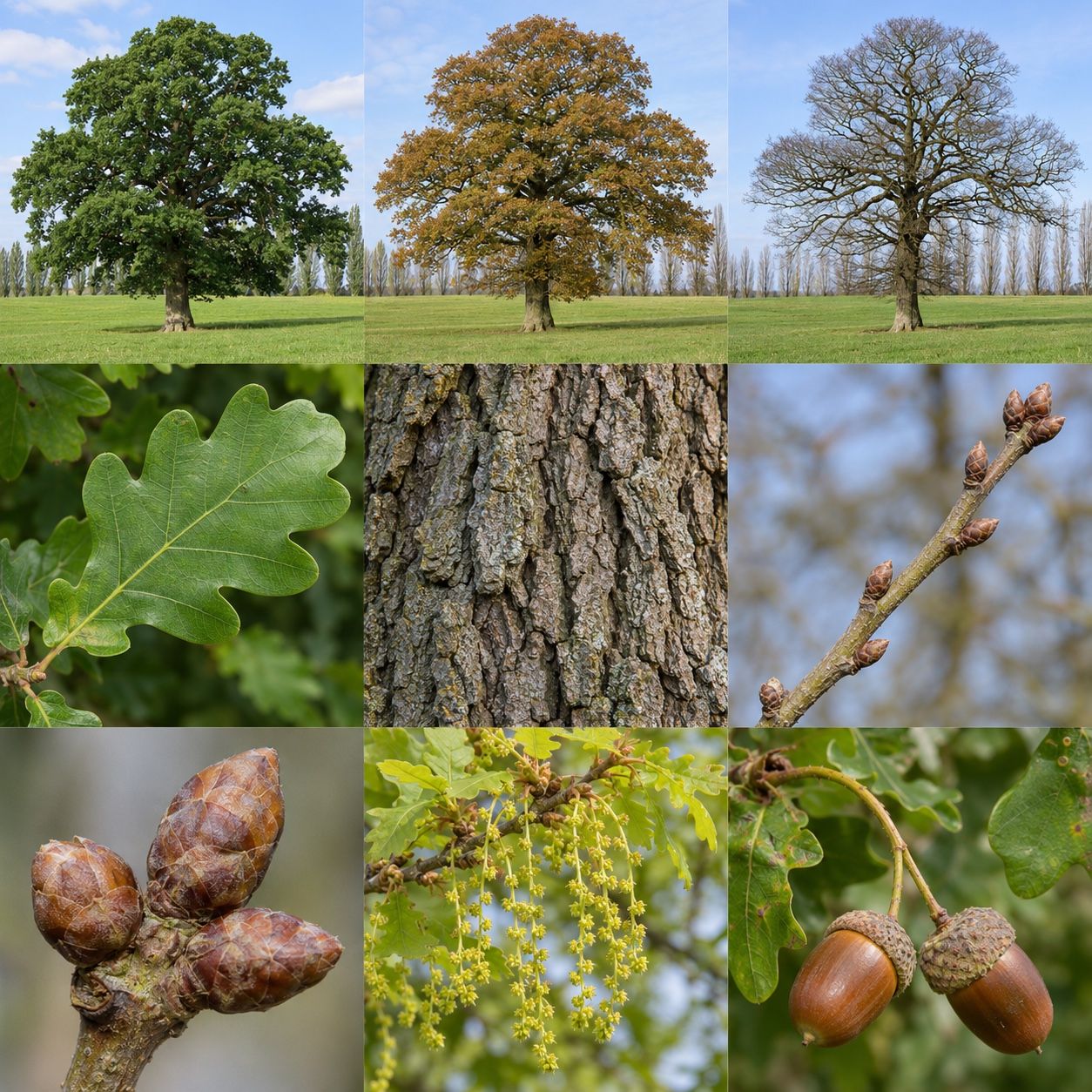
Rounded lobes, very short stalks and two small ear-like lobes at the leaf base.
Quercus robur
A wide-crowned native oak with heavy, twisting limbs and acorns carried on stalks.
THROUGH THE YEAR
A broad, rounded canopy with heavy spreading branches.
Leaves turn ochre and brown; stalked acorns fall beneath the crown.
Thick, twisting limbs form a wide, open silhouette.
Typical open-grown form. Leaf fall varies with weather and location; young or clipped trees may retain dead leaves. Pruned, sheltered and young trees can look different.
LOOK A LITTLE CLOSER
Rounded lobes, very short stalks and two small ear-like lobes at the leaf base.
Grey-brown; develops deep vertical fissures and ridges as the trunk thickens.
Stout, grey-brown shoots; short side branches create a rugged, irregular outline.
Small brown buds crowd together at shoot tips; each has several overlapping scales.
Slender yellow-green male catkins hang below fresh foliage; tiny female flowers sit on stalks.
Acorns sit in shallow cups on long stalks, ripening brown in autumn.
Typical flowering: Apr, May. Weather and location change timing.
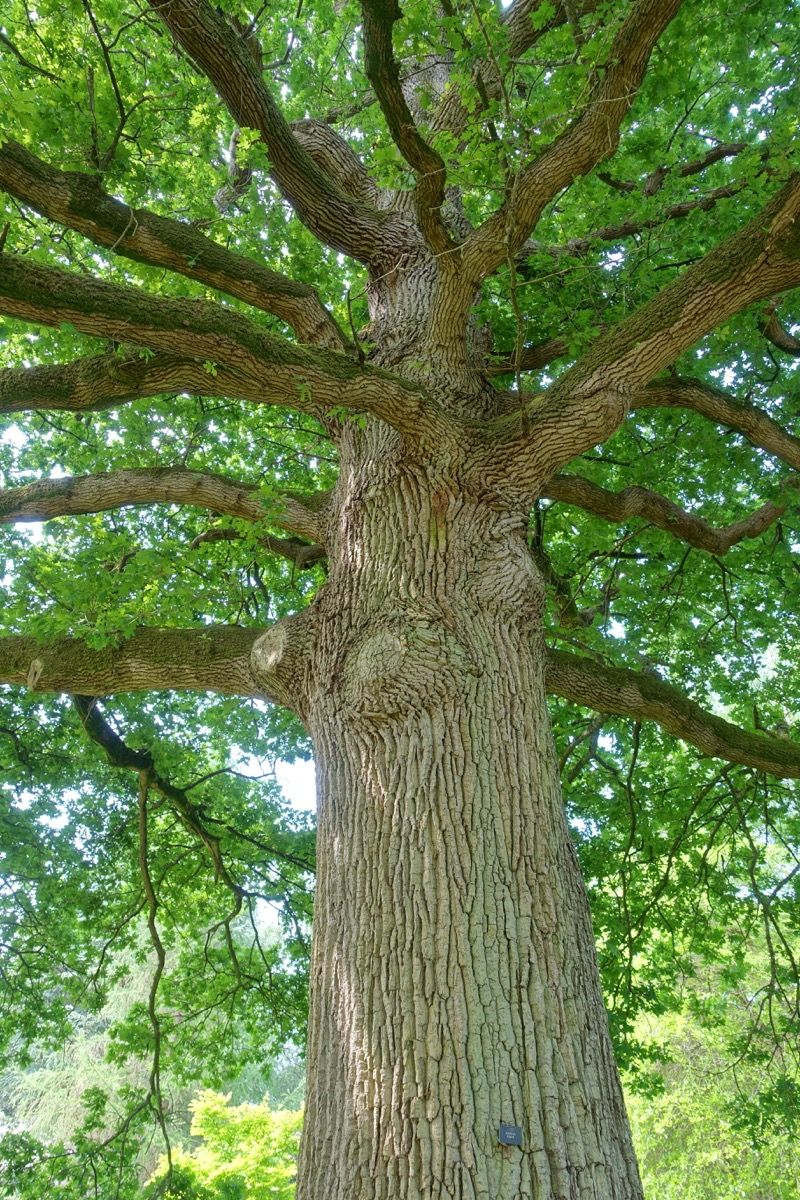
Sheffield Park and Garden, East Sussex, England, United Kingdom
The trunk, spreading branches and canopy of an English oak at Sheffield Park and Garden.
Quercus robur — Sheffield Park and Garden, East Sussex, England — Daderot / Wikimedia Commons · CC0 1.0 · Original photograph ↗Images show typical features and are not to scale. Confirm several features using the reference sources below.
CARE WITH PURPOSE
Give this large tree room. Keep soil beneath its canopy uncompacted; avoid trenching, raised soil levels and paving over roots.
Preserve its spreading framework. Keep routine cuts small; veteran trees and substantial crown reductions need individual professional assessment.
June–August, after leaves harden
Highlighted months are an indicative window for the work described, not a reason to prune every year. An unshaded month is not an absolute ban.
Timing must suit the tree's health, weather, wildlife and legal protection. Avoid severe frost, drought and vulnerable new leaf growth. Mature trees, major branches and suspected defects need professional assessment.
Report unusual crown decline or bleeding patches for assessment; keep away from oak processionary moth nests.
Guide researched November 2026. Identification remains provisional until several features agree. UK native means native in some part of the UK, not necessarily your area.
Before work in England, check tree preservation orders, conservation-area restrictions and wildlife protection. Official tree protection guidance ↗