

Sooty bark disease in sycamore trees: what to look for and what to do
· Michael Wood (Morley)
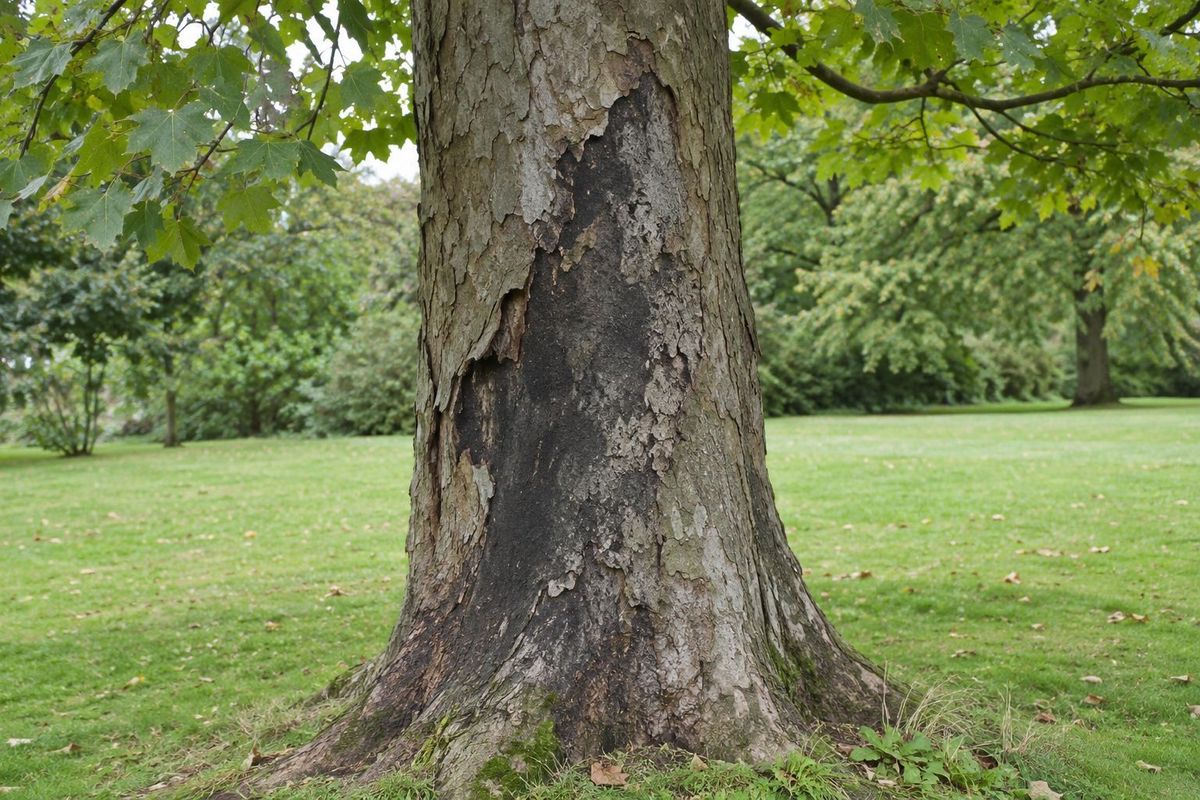
If a sycamore on your property has started shedding bark and there’s a black, powdery patch underneath, leave the bark alone. It could be sooty bark disease, a fungal disease that can cause serious decline in sycamores. Here’s what to look for from a safe distance and when to get the tree checked.
What does sooty bark disease look like?
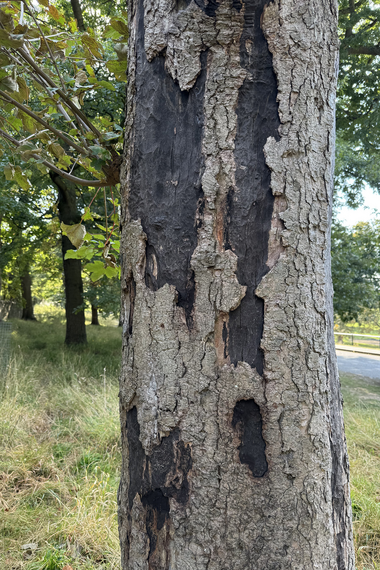
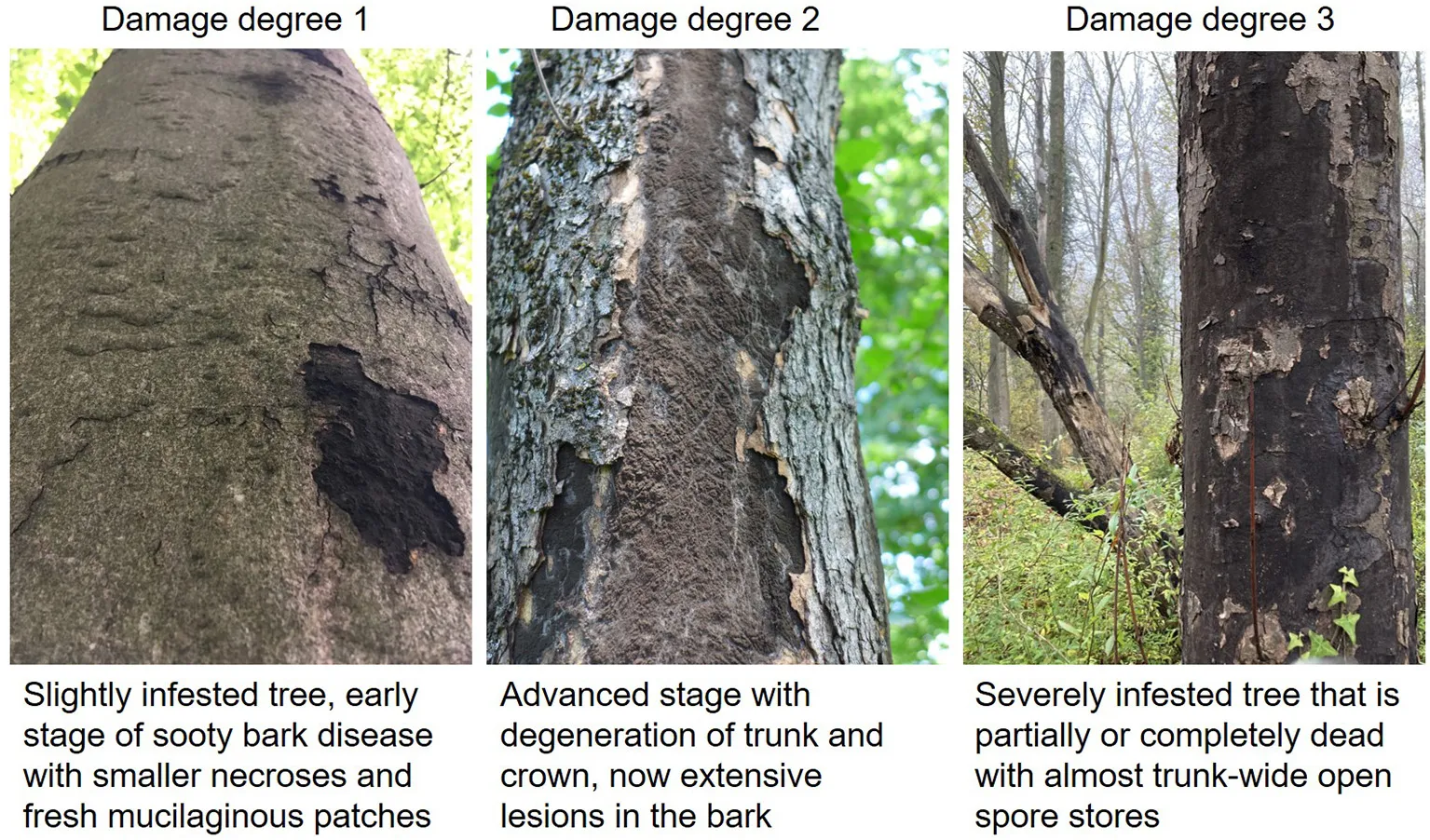
You might notice leaves wilting during the growing season or branches dying back. The more distinctive sign is a dark, soot-like layer that’s exposed as bark splits or falls from the trunk or larger branches. Wilting and dieback have several possible causes, so an arborist will look at the tree as a whole before advising you. Forest Research disease guide
Photographs of affected sycamores
Why does it often show up after a hot summer?
The fungus can live inside a sycamore for some time before the tree shows symptoms. Prolonged heat and drought can stress the tree and favour disease development. In October 2026, Forest Research said TreeAlert had received 70 suspected reports over five months, compared with 16 over the same period the previous year. Forest Research’s October 2026 TreeAlert update
Where has sooty bark disease been reported?
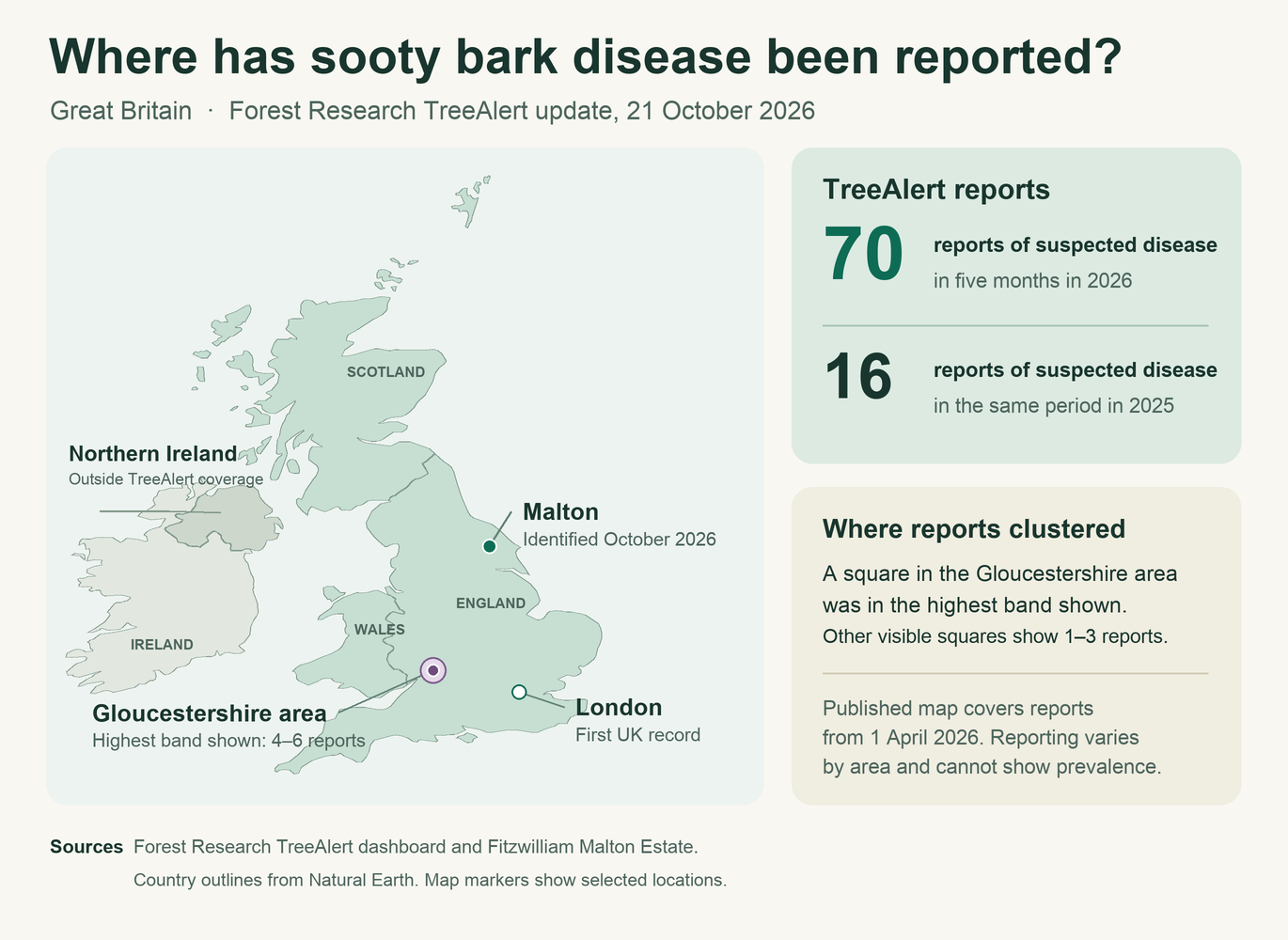
The map shows where people reported suspected sooty bark disease to TreeAlert. Some affected trees may go unnoticed or unreported, so the disease could be more widespread than the map suggests. The true number of affected trees is still unknown.
Cheltenham and Malton are documented local examples. The public update gives a Great Britain total, so regional rankings are unavailable. In Northern Ireland, suspected cases can be reported through TreeCheck.
Sources: October 2026 TreeAlert update · UK sooty bark disease monitoring guidance
What do we know about sooty bark disease in Yorkshire?
In October 2026, the Fitzwilliam Malton Estate identified sooty bark disease in one mature sycamore at Orchard Fields in Malton, North Yorkshire. Forest Research has received reports further north, but the total number of affected trees in Yorkshire and how quickly the disease may be spreading locally are still unknown.
The fungus spreads naturally through airborne spores. As infected bark peels away, it exposes the dark, powdery layer, and wind can carry spores from affected trees. Leave suspect bark undisturbed and ask an arborist for advice if you’re concerned.
What should I do if I suspect it?
- Leave the bark and affected wood undisturbed. Avoid scraping the patch, peeling away bark or cutting the tree yourself. The powder can contain spores that cause breathing problems if inhaled.
- Take photos from a safe distance, if you can. A picture of the whole tree and one of the affected area can help. Note the location and report the suspected case through Forest Research’s TreeAlert.
- Ask an arborist to assess the tree, especially if it stands near a road, footpath, building or other busy area. If the tree is on public land, let the land manager or council know.
Arboricultural Association guidance
Will the tree need to come down?
The answer depends on the tree’s condition, where it stands and who could be exposed to falling branches or disturbed spores. An on-site assessment can help establish how urgently action is needed. Where removal is recommended, tell the contractor you suspect sooty bark disease so they can plan the work to limit exposure.
If you’re concerned about a sycamore in Leeds, Morley, Wakefield or elsewhere in West Yorkshire, call Michael Wood (Morley) on 0113 253 9917 or send us an enquiry. Tell us where the tree is and what you’ve noticed.
Sooty bark disease of sycamore in our Pests & Diseases guide