

Autumn tree care in Yorkshire: getting ready for winter
· Michael Wood (Morley)
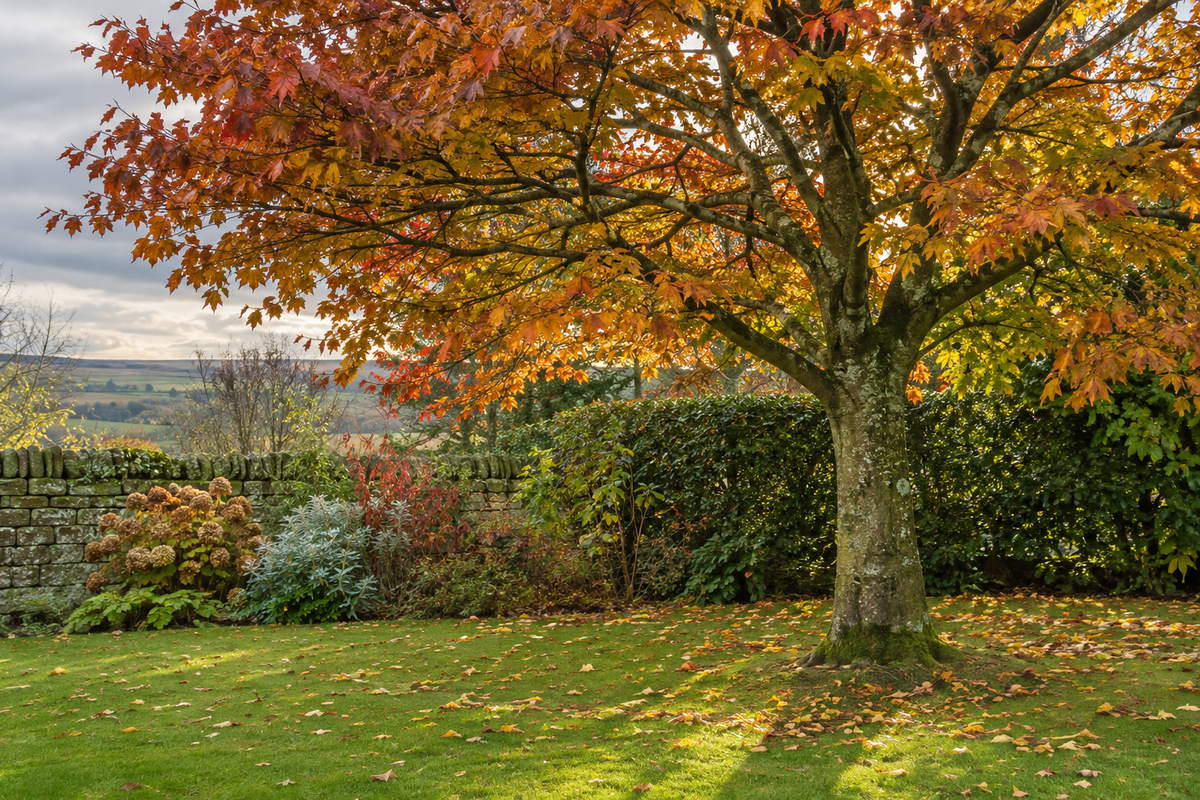
Autumn is a good moment to look at the trees on your property. Leaves are thinning, so structure is easier to see, and the ground is usually softer than in summer. Here are a few sensible things to think about before winter sets in.
Look around after windy weather
After a blustery spell, walk around your trees from the ground and look at the base and the ground beneath them. Fallen twigs and leaves are normal. What deserves attention is fresh soil lifted at the foot of a trunk, new cracks in the ground, a tree that seems to lean more than it did, or large broken branches caught in the crown. If you notice any of these, keep people and pets away from the area and ask a professional to take a look. Please do not climb the tree or try to cut it yourself.
Check young tree stakes and ties
A newly planted tree is often held by a stake and a tie. Ties can rub the bark or become too tight as the trunk thickens, and stakes can loosen. A quick check now is worthwhile: the tie should hold the tree gently, not dig into it, and the tree should be steady without being rigid.
Keep mulch away from the trunk
A layer of mulch around a tree helps keep moisture in the soil and reduces competition from grass. The point is to spread it in a wide ring and leave a small gap around the trunk itself, rather than piling it against the bark, where it can hold moisture against the stem.
Plant when the soil suits
Autumn can be a good time to plant, because the soil still holds some warmth and winter rain helps roots settle. The key word is conditions: ground that is waterlogged, frozen or bone dry is not a good place to put a tree in. If you are unsure which tree suits your space, our tree planting page explains how we can help.
Pruning depends on the species
There is no single rule that says autumn is the time to prune everything. Some trees are best pruned at one time of year and others at another, and a few are better left alone for now. Cutting at the wrong moment can encourage disease or heavy bleeding of sap. If a tree needs work, it is worth finding out what suits that particular species first. You can read about tree pruning on our site, or ask us about a specific tree.
Not sure about a tree?
If one of your trees looks unwell or unsafe, a visit from a tree specialist can help you understand what is going on. Tell us where you are and what you have noticed through our quote form, or call the office, and we will talk through the next step.
Further reading
The Royal Horticultural Society publishes helpful guidance on seasonal tree care:
- RHS tree pruning guide: explains that the right time and method depend on the type of tree, and why cuts should be planned rather than made at random.
- RHS October tree and shrub advice: covers jobs that suit this time of year, including planting while the soil is workable.
- RHS September tree and shrub advice: offers earlier-autumn suggestions for looking after trees and shrubs.
These are independent sources. For work on your own trees, please speak to a qualified professional.